
Why Your Skincare Stops Working in Your 40s
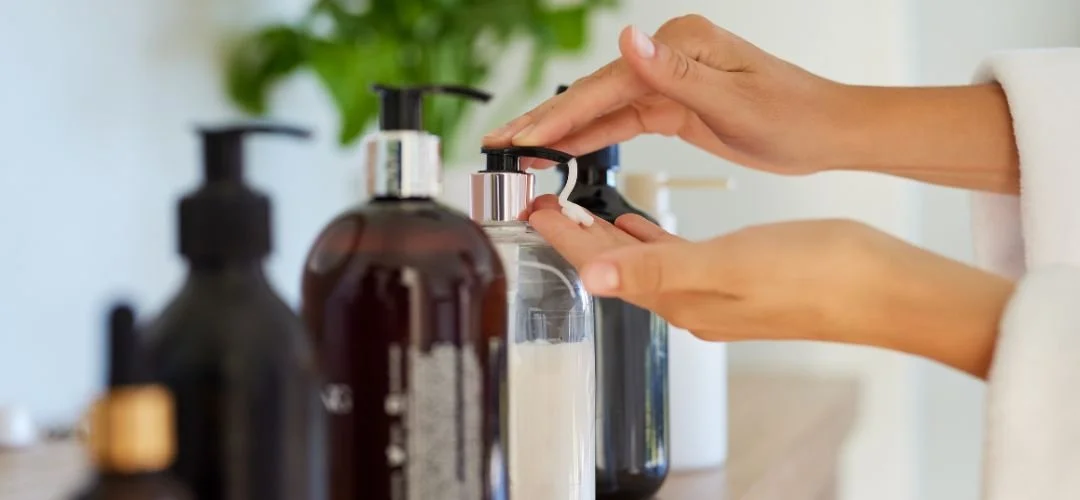
It was a normal Wednesday in my dermatology clinic: a steady cadence of skin cancer exams with a sprinkling of acne and hair loss on the schedule.
According to the chart, the patient in Room 3 was a 43-year-old woman with rosacea.
My nurse came out after rooming her.
“Get ready,” she sighed. “She has a bag of products. And none of them are working.”
I see this multiple times a day as a board-certified dermatologist specializing in perimenopausal and menopausal skin concerns. Women in their late 30s through their 50s sit perplexed on the exam room chair with the products they have trusted for a decade lined up on my mayo stand like the usual suspects in a police lineup.
They all want to know the same thing:
Which one of these formerly friendly serums suddenly turned against them?
“I’ve done everything the same,” they tell me.
“I haven’t changed anything. But my skin is different.”
Red.
Dry.
Irritated.
Tight.
Breaking out.
Dull.
Sagging.
Wrinkled.
“But I’m doing all the right things,” they say.
“Which product is doing this to me?”
Before I took a deep dive into what I now call the Hormone–Skin Axis, I puzzled over ingredient lists looking for common irritants and allergens to blame. I wondered if skincare companies had quietly reformulated their products. Like the patients sitting in front of me, I looked for an external force responsible for what we were seeing.
My perspective changed around the same time I could no longer read those infinitesimally small ingredient labels without holding them at arm’s length.
Instead of looking at the products lined up for execution on the metal tray, I started looking inward.
It wasn’t the formulations.
It wasn’t the latest allergen of the year.
The common thread connecting these women was far simpler.
Their hormones had shifted.
Their skin had changed.
And their products no longer worked.
Skin ages with our hormones.
Skin Is a Hormone-Responsive Organ
To make sense of this shift, I had to revisit biology that I had barely learned during dermatology residency beyond a brief lecture on hormonal acne. I began to view the skin in a new light: as a hormone-responsive organ.
Let’s start with estrogen.
Despite the fact that estrogen receptors exist in nearly every organ in the body, this critical hormone received almost no attention in my dermatology training. I completed residency between 2007 and 2011, when hormone therapy was still living in the shadow of the Women’s Health Initiative. At that time, we were primarily taught what hormones might do to women — breast cancer, stroke — rather than what they did for women.
So we simply moved on.
In hindsight, this was a massive omission in training — one I now actively work to correct through continuing medical education and speaking on the role of hormones in skin health.
Because every major cell type in the skin is estrogen-dependent.
Keratinocytes, the cells that form the skin’s outer structure.
Fibroblasts, the cells responsible for producing collagen, elastin, and hyaluronic acid.
Sebaceous glands, which maintain the skin’s protective barrier and healthy acidic pH.
Hair follicles.
Blood vessels that deliver oxygen and nutrients.
When estrogen declines, the entire system begins to slow.
Collagen, elastin, and hyaluronic acid production drop. Skin becomes thinner, drier, and less resilient. Cell turnover slows, allowing dull and damaged cells to accumulate on the surface. Oil production decreases. The microbiome shifts. Wound healing slows. DNA repair becomes less efficient. Inflammation increases.
To a woman experiencing these changes seemingly overnight, there is no skincare product in the world that can completely reverse them.
And yet, as women so often do, we blame ourselves. Something we are doing wrong. Something we failed to do.
When we view the skin through a hormonal lens, however, the changes suddenly make sense.
More importantly, they create a framework for restoring health and vitality.
This is what I call the Vital Skin Framework.
The Collagen Cliff
When I was growing up in the 1980s and 1990s, I had a rotating cast of celebrity crushes: Robert Redford, Sean Connery, Harrison Ford, Tommy Lee Jones. Yes, I was rather promiscuous with my crushes from my small hometown of Macon, Georgia.
I remember learning in high school that Sean Connery was roughly the same age as Julie Andrews — a beautiful woman, certainly, but not quite the enduring sex symbol that the former James Bond remained.
Why did she appear so much older while he maintained his rugged good looks?
Why do women often seem to fall off a cliff of aging while men appear to age more gradually?
Some of this reflects cultural expectations. Weathered skin reads as rugged and distinguished on men who built careers playing cowboys and spies. The same aesthetic is less forgiving in women who have long been expected to remain smooth, slender, and spotless.
But there is also real biology at play.
Because female skin is so estrogen-dependent, the transition into menopause produces a dramatic shift in skin structure.
Within the first five years after menopause, women lose up to 30 percent of their collagen, followed by roughly 2 percent each year thereafter.
I often refer to this as the collagen cliff.
I remember seeing it quite literally while driving through Wyoming with my husband on our anniversary trip. I was studying for my menopause certification exam at the time and apparently could no longer look at anything without seeing hormones.
As we drove toward Grand Teton National Park, the silhouette of the mountains against the sky looked eerily familiar. I made my husband pull over so I could take a photo.
The ridgeline looked exactly like the hormone curve of perimenopause dropping sharply into menopause.
That drop is what our skin experiences as well.
Areas where the skin is already thin — like the neck and around the eyes — are often the first to show the change. Remove 30 percent of structural support from delicate tissue and the result is predictable.
Collagen fibers provide strength and structure.
Elastin fibers allow the skin to stretch and recoil.
Hyaluronic acid binds water and maintains hydration.
When these components decline, the skin begins to sag, wrinkle, and feel increasingly dry.
Barrier Dysfunction
The effects are not purely cosmetic.
The skin is also a barrier organ, and menopause weakens that barrier.
Our outer wall of defense becomes thinner and more vulnerable to irritation, injury, and infection. Minor bumps or scrapes can evolve into prolonged bruising or tears as wound healing slows.
Dry, flaky skin often ignites into itchy red inflammation, sending women down late-night internet searches trying to solve the problem themselves.
The proteins that normally hold skin cells together — keeping moisture in and irritants out — diminish. Under the microscope, menopausal skin can resemble an inadequately grouted tile floor.
Transepidermal water loss, or TEWL, increases. Dryness compounds dryness. Sleep becomes disrupted by itching or discomfort. Facial redness raises fears of rosacea or autoimmune disease.
Women often respond by layering more makeup or purchasing increasingly expensive skincare products promising a quick fix.
And yet the cycle continues.
They no longer look like themselves.
They no longer feel like themselves.
Skin is not simply a cosmetic surface.
It is a hormone-responsive organ.
Tell me again that this is merely a cosmetic concern.
Cell Turnover Slows
Another subtle shift is occurring at the cellular level.
In youthful skin, the process of cellular renewal takes roughly 28 days. Old cells shed and are replaced with new ones in a continuous cycle of regeneration.
Menopause slows that process dramatically.
Cell turnover can extend to 40 to 60 days, allowing damaged and aging cells to accumulate on the surface. The complexion becomes dull. Texture worsens. Oil glands clog more easily, contributing to acne or milia.
At the same time, senescent “zombie” cells linger longer, releasing inflammatory signals that further degrade surrounding tissue.
Pigmented cells from prior sun damage remain embedded in the skin for longer periods, contributing to the sudden appearance of new discoloration.
The skin’s regenerative engine has lost one of its primary fuels: estrogen.
What Women Are Not Being Told
Women look in the mirror and assume they are to blame.
They buy more products.
More lasers.
More makeup.
The skincare industry quietly reinforces the message that if something isn’t working, the solution is simply to buy something else.
The problem isn’t always your skincare routine.
Sometimes the biology of your skin has changed.
Women sit in my exam room believing they have somehow failed their skin.
They think they bought the wrong product.
Used the wrong serum.
Missed the one ingredient everyone else seems to know about.
But more often than not, the real story is simpler.
Their biology has changed.
When we take the products off the tray and begin talking about hormones, the entire narrative shifts. We talk about sleep, inflammation, stress, and the subtle physiologic transitions happening in midlife. Sometimes the strategy involves hormone therapy. Sometimes it’s a small change in skincare or the order in which products are applied.
The exact approach is different for every woman.
But the moment we begin viewing the skin through a hormonal lens, something important happens.
The confusion starts to make sense.
And women regain something that aging often seems to take away.
Agency.
Because skin is not simply a cosmetic surface.
It is a living, hormone-responsive organ.
And understanding that biology is the first step toward finding a new path to vitality.
