The Scoop on Collagen Powders for Skin Health: A Dermatologist’s Evidence Deep-Dive
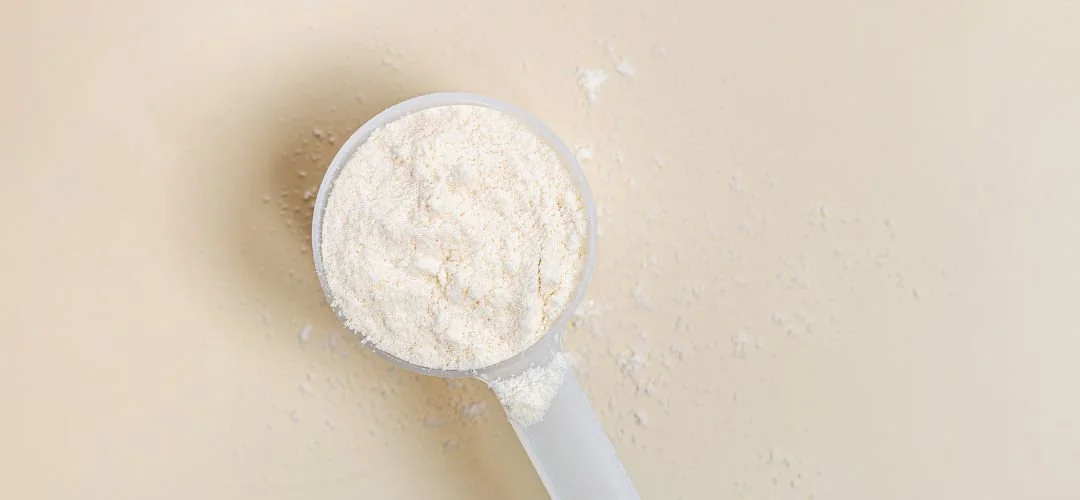
“Will collagen supplements really help my skin?” This is one of the questions I get most from patients, friends, and family members. It’s easy to understand why. Walk into any pharmacy or grocery store, and collagen products are impossible to miss. From gummies to “beauty” creamers in on-the-go packets, there is something for everyone seeking firmer, plumper, more hydrated skin. The marketing is confident. The science is more complicated.
I often arrive at my office to some new jar or packet of collagen powder for me to try and sell to patients alongside sunscreen and retinols. I’ll be clear from the start: I do not take or sell collagen supplements.
I continue to make this decision based on the information I am sharing with you below. Let’s take a look at the collagen supplement trials themselves, who funded them, and the parts the marketing leaves out.
Evidence Supporting Collagen Supplements
There is a real body of randomized controlled trial (RCT) data here, and on its face it looks encouraging. So encouraging, in fact, that when I first read through it I panic-ordered a vat of collagen powder from Costco. Several meta-analyses pooling these trials report benefit:
A 2023 systematic review and meta-analysis of 26 RCTs (1,721 participants) found hydrolyzed collagen significantly improved skin hydration and elasticity versus placebo, with longer supplementation producing more favorable effects. (Pu et al., Nutrients 2023; 15:2080)
A separate meta-analysis of 10 RCTs (646 participants) likewise reported statistically significant gains in hydration and elasticity. (de Miranda et al., as summarized in Indian J Dermatol Venereol Leprol)
A large 2022 review of 66 RCTs of skin-moisturizing supplements concluded that oral collagen (along with ceramides, hyaluronan, and procyanidin) produced a statistically significant increase in skin hydration and a decrease in transepidermal water loss. (Liu et al., Front Nutr / PMC9201759)
If you stop reading there, which I initially did and which most marketing does, collagen looks like a slam dunk for your skin.
The mechanism case
The proposed mechanism is biologically reasonable. Hydrolyzed collagen peptides aren’t absorbed and slotted directly into your dermis like Lego bricks. Instead, small collagen-derived peptides, particularly proline-hydroxyproline (Pro-Hyp), hydroxyprolyl-glycine (Hyp-Gly), and Gly-Pro-Hyp, survive digestion and reach the bloodstream at measurable levels. In cell culture, these peptides reliably stimulate dermal fibroblasts to make more hyaluronic acid (the molecule responsible for skin hydration), to upregulate type I and III collagen synthesis, and to downregulate the enzymes (MMP-1) that break collagen down. That’s the proposed cascade: more building, less breaking, with small peptides acting as signaling molecules rather than raw material.
It’s a coherent story. The question is whether it actually translates into clinically meaningful changes in human skin. This is where the trial data matters, and where things get interesting.
The funding behind the findings
At least two curious scientists didn’t take these impressive findings at face value. In 2025, Myung and Park published the first meta-analysis in The American Journal of Medicine that separated the RCT data by who paid for the study. Meaning, they looked at the results of studies paid for by the companies producing and selling the supplements, and they looked at studies done without industry funding. This included 23 RCTs with a total of 1,474 participants.
Here is what they found, and it is the single most important thing in this entire post:
When they pooled all 23 trials together, collagen significantly improved hydration, elasticity, and wrinkles. (The familiar positive result.)
When they only looked at trials NOT funded by industry, there was no significant effect on hydration, elasticity, or wrinkles. None.
When they only looked at trials funded by pharmaceutical/supplement companies, collagen showed significant benefit across the board.
High-quality trials (low risk of bias): no significant effect in any category.
Low-quality trials: showed the improvements.
The authors’ conclusion was blunt: there is currently no clinical evidence to support the use of collagen supplements to prevent or treat skin aging once you account for funding source and study quality. (Myung SK, Park Y. Am J Med 2025; doi:10.1016/j.amjmed.2025.04.034)
In plain terms: the effect lives almost entirely in the studies paid for by the people selling collagen. When independent researchers run the trial, the benefit tends to evaporate.
This pattern of industry sponsorship predicting favorable outcomes is well documented across all of medicine (the classic reference is Lexchin et al., BMJ 2003, finding industry-funded studies ~4x more likely to favor the sponsor). And while it doesn’t completely negate the findings, it does put them in an important context worth consideration by consumers.
None of this means the researchers are dishonest. The 2026 letters to AJM defending these trials make a fair point: industry funds most nutraceutical research, and good methods plus full disclosure can coexist with a commercial sponsor. But for you as a consumer, the takeaway stands: when you see a glowing collagen study, check the funding line first. If it’s the manufacturer, weight it accordingly. It may have more benefit for their bottom line than for your skin.
The protein problem
Look at the nutrition labels on the collagen supplements and you may see anywhere from 10 to 20 grams of protein per serving. For those of us perimenopausal women trying to get our 0.65 to 1.0 grams per pound each day, this seems like a win for our skin and our protein tally. But let’s gnaw on this a minute.
Protein quality is about essential amino acids: the nine your body can’t make and must get from food. Collagen contains 19 amino acids but is missing one essential one entirely: tryptophan. That single omission means that, by definition (and by the standard PDCAAS scoring method), collagen is an incomplete protein. (Paul et al., Nutrients 2019; PMC6566836)
It gets worse for the “look how much protein!” claim:
Only about 14% of collagen is essential amino acids. Milk protein, for comparison, is roughly 43%.
Roughly 47% of collagen is glycine, proline, and hydroxyproline. These are useful for connective tissue but not the building blocks for general protein needs.
What this means practically: if your tub says “20g protein per scoop,” that protein is not equivalent to 20g of whey, egg, or soy. Your body can’t fully use it for muscle protein synthesis or general repair, because the missing tryptophan caps how much of it counts toward complete-protein needs. Collagen should not be counted as part of your daily protein target the way a complete protein would be.
(If you do want to use it as protein: take it alongside a complete protein source like eggs, dairy, or meat rather than as a standalone protein hit. “Tryptophan-fortified” collagens exist, but that’s added back in processing, not native to the collagen.)
The purity problem
Supplements in the US are not pre-approved or routinely tested by the FDA before sale. That regulatory gap matters for any animal- or marine-sourced powder, because bones, skin, and connective tissue can accumulate environmental heavy metals.
The most-cited data point is a 2020 Clean Label Project / Organic Consumers Association white paper that tested 28 top-selling collagen products on Amazon. Their reported findings:
64% had measurable arsenic
37% had measurable lead
34% had measurable mercury
17% had measurable cadmium
They reported one well-known brand at roughly double California’s safety threshold for a toxic metal, and several others at 2–3x. (Clean Label Project & OCA, 2020.)
Important caveat, and I want to be honest here, not alarmist: this was a non-peer-reviewed white paper from an advocacy group, and industry bodies (the Natural Products Association, the Collagen Stewardship Alliance) pushed back hard, criticizing the methodology and the lack of disclosed funding. “Measurable levels” is also not the same as “dangerous levels.” Heavy metals are naturally present in soil, water, and food, and dose matters. The same organization’s later protein-powder reports drew similar industry criticism. So treat the specific percentages as a flag, not gospel.
But the underlying principle is sound and uncontroversial: animal-sourced supplements can carry heavy-metal contamination, the category is poorly regulated, and the only real protection is third-party testing. Heavy metals like lead, cadmium, mercury, and arsenic accumulate over time and are linked to organ, neurological, and kidney harm.
What to look for: third-party verification (NSF, USP, Informed Choice, or published Certificates of Analysis with actual heavy-metal numbers). Be skeptical of “clean,” “pure,” and grass-fed-cow imagery on the label. Those are marketing words, not test results.
My bottom line
I’m not telling you collagen is a scam, and I’m not telling you to throw out your tub. Here’s the honest synthesis:
The strongest “it works” evidence is disproportionately funded by the companies selling it. When you isolate independent, high-quality trials, the skin benefit largely disappears. That’s the most important sentence in this post.
It will not hurt most healthy people (it’s generally well tolerated in trials up to ~24 weeks), and there’s a plausible mechanism. If you enjoy it and your budget allows, it’s a low-risk experiment. Just calibrate your expectations.
Don’t count it as protein. It’s incomplete (no tryptophan), so the gram count on the label overstates its nutritional value. Pair it with a complete protein, or get your protein elsewhere.
If you take it, buy third-party tested. The category is unregulated and contamination is a real (if often overstated) risk.
The things with the strongest evidence for aging skin are still the unglamorous ones: daily sunscreen, a retinoid, not smoking, and topical/procedural interventions. A powder in your coffee is not going to outperform those.
If your goal is firmer skin, I’d rather you spend the $40/month on sunscreen and a retinoid than on a collagen tub funded by its own clinical trials. But if you’ve read this far and still want to try it, now you know how to assess the science like a clinician.
