
Skin in Menopause: Not a Fix. A Plan.
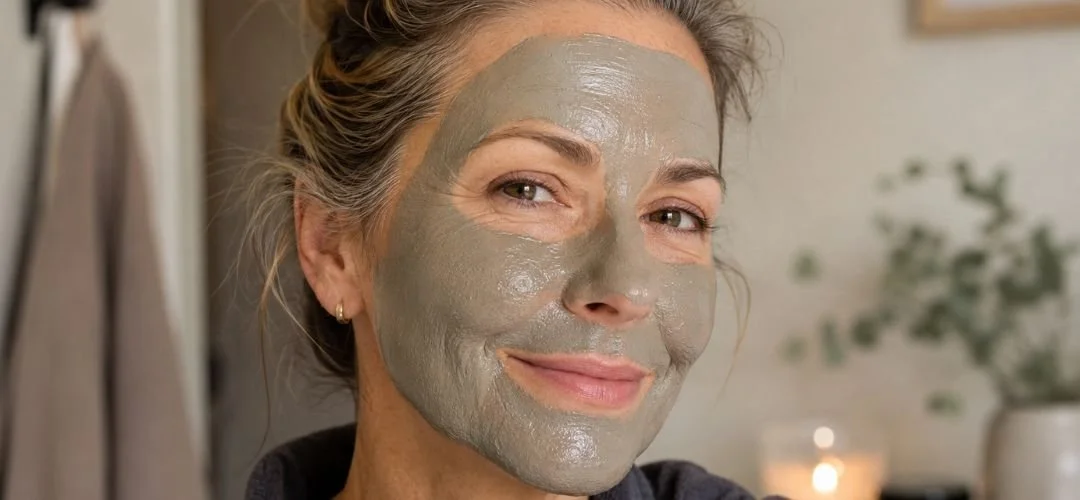
I posted a clip of my recent talk about skin aging and menopause on Instagram this weekend, and someone commented, “All bad. What’s the fix?” Yes, in my video, I was showing a curve illustrating how collagen and elastin decline with estrogen at menopause and how this impacts aging in women. Before we know how to address it, we have to understand the biology behind it. But I heard this woman’s frustration in her comment, and I share it as a perimenopausal woman, where the seemingly bad news about our postmenopausal states is more abundant than accessible options to address them. So this Substack is for her, and women like her, who are tired of being told what is wrong or will be wrong as we hit menopause, and will share what tools we have, both inside and outside of the hormone space, to do about it.
Protect What You Have
I use the phrase “protect what you have and replace what you’ve lost” frequently in talks and posts about midlife skin health. The best news is that protecting what you have, the skin edition, requires a couple of products from the drugstore and remembering to use them. Sunscreen every day. A retinoid every night. Gentle cleansers and moisturizers. This doesn’t need to cost a fortune or be complicated. It just needs to be consistent. Did I mention the importance of sunscreen?
Replace What You’ve Lost
This is where skin health strategies can get more interesting, innovative, and at times, expensive. It’s also where the buzz often outruns the evidence and gets intelligent women slinging verbal mud at each other on social media. Actually, looking for the mudslinging is not a bad place to find interesting clinical questions that may lead to clinical advancements if we can stop arguing and start thinking. The use of topical estrogen is an example of this that immediately comes to mind. I use it, I educate about it, greatly respect my colleagues who can have intelligent conversations about it, and I know the mud is probably coming for me. I can take a shower if needed.
Speaking of estrogen, the most obvious thing to replace as menopause approaches is the hormone itself, which falls close to zero once ovarian production ceases. The often cited Brincat article reports that without hormone therapy, women lose 30% of collagen within 5 years of menopause. If collagen and elastin decline along with estrogen, then won’t giving the estrogen back restore our skin to its youthful state?
Hormone Therapy and Skin Health: The Data is Mixed
Some studies have shown that hormone therapy with systemic estrogen can reduce that loss. The collagen and biopsy evidence from Brincat’s 1983 study favors systemic estrogen for skin health. Possibly jamming out to “Every Breath You Take,” 1983’s top Billboard hit, Brincat and colleagues examined skin biopsies and found that postmenopausal women on hormone therapy had more skin collagen than women who weren’t, and that collagen tracked with how long it had been since menopause rather than with chronological age. A later treatment study added the part clinicians care about: estrogen didn’t just correlate with collagen, it raised it, acting as a preventive in women who still had plenty and as both preventive and corrective in women who’d lost more. The often-cited figure that comes out of this body of work is that women lose up to 30% of their skin collagen in the first five years after menopause, then two percent a year after that. If you only read that far, hormone therapy looks like an obvious win for skin.
But the best randomized trial to measure visible aging, the skin sub-study of the KEEPS trial, was released in 2016 when Justin Bieber’s “Love Yourself” topped the charts. A lot more than musical tastes changed between Brincat in 1983 and KEEPS in 2016, namely the WHI, which essentially killed hormone therapy prescriptions, education, and interest with its terrifying headlines about breast cancer, heart disease, and stroke in 2002. But back to skin. The KEEPS trial found no significant difference in wrinkles or skin firmness after four years between women on systemic estrogen and women on placebo. Granted, these results were based on visual analysis rather than biopsies, the facial skin they studied may be less responsive to estrogen because of sun exposure, and the estrogen doses were lower than in the studies where collagen improved.
So the truth about estrogen therapy’s ability to replace and protect collagen lives somewhere between a biopsy and a mirror. Estrogen clearly does something for the structure of the skin, and that has been shown under the microscope. Whether you see it looking back at you is less certain. This is one reason that skin health alone is not an indication for systemic hormone therapy. But just because it’s not a reason to prescribe it doesn’t mean that we should not consider its potential impact.
This isn’t simply a case of biopsies saying yes and mirrors saying no. Even some collagen studies have come up empty. One found that systemic estrogen had no measurable effect on skin collagen at all. The evidence is mixed at every level of measurement. That’s not a reason to dismiss it. It is a reason not to oversell it.
What About Topical Estrogen?
Which brings me back to my own face. If the systemic evidence is real but modest, and systemic hormone therapy carries a whole-body risk-benefit calculation, the obvious question is whether you can get the skin benefit locally, by putting estrogen only where you want it to work. The benefit of topical estrogen to treat genitourinary syndrome of menopause is well established, and that’s from its ability to restore hydration, collagen, and blood flow to the skin and tissues in that region. Yes, your face and vulva are different, and for more than the hopefully obvious reasons. Facial skin is keratinized; the vulvovaginal mucosa is not. They share the important commonality that they both contain estrogen receptors, and their health can deteriorate when estrogen declines. This is the appeal of topical estrogen on the face, and it’s surprisingly polarizing amongst medical providers despite the sound biologic basis.
I’m literally willing to risk my own neck over it and apply estriol 0.3% nightly to it and my eye area. The small dose is unlikely to have a meaningful systemic impact, and once I need systemic estrogen, I’ll take progesterone to protect my uterus if I haven’t figured out a way to exile the bloody beast from my body at that point.
The skin is full of receptors waiting to respond, the barrier to entry is lower than systemic therapy, and it’s safe for most women. The trade-off, though, is that the benefit, whatever it turns out to be, stays in the skin. Facial topical estrogen won’t protect your bones, heart, or vulva. If you feel like you need estrogen on your face, I hope you and your provider are also applying the same logic and have you on topical local estrogen for your vulvovaginal area. We are not destined for diapers and chronic UTIs. Those look and feel worse than crow’s feet.
Studies on topical estrogen are few, small, and old. Some show improvement in elasticity, collagen, and fine lines. We also don’t have a clear handle on how much crosses into the bloodstream. Several studies report no meaningful rise in serum estradiol, yet some women still report systemic estrogenic effects, which means “it’s only topical” is not a guarantee of “it stays local.” So when I tell you I’m using estriol on my face, I’m telling you I find the idea interesting enough to try on myself with my eyes open. I’m not telling you it works. Those are different sentences, and I won’t blur them.
So, Should You Take Hormone Therapy for Your Skin?
The current evidence does not support skin health as an indication to prescribe systemic hormone therapy. Wrinkles may break your spirit but not your hips, and the data isn’t strong enough to justify a systemic risk on skin’s behalf alone. But not being a reason to prescribe is not the same as having no benefit. If you are already considering hormone therapy for reasons that are well established, hot flashes that wreck your sleep, genitourinary symptoms that affect your daily life, and the protection of your bones, then your skin is part of the same body that stands to benefit, and it belongs in the conversation. For the woman who has decided to start estrogen for her health, what it may do for her skin still counts.
That’s the answer I give in clinic, and it’s less satisfying than a yes and more useful than a no. Estrogen is not a wrinkle cream or anti-aging supplement. It will not give you back the face you had at forty. It is a hormone with genuine activity in your skin, and for the right woman taking it for the right reasons, the skin is a quiet beneficiary rather than the headline. I find all of this compelling enough to study, to discuss with my patients, and to try on my own skin.
From Brincat to KEEPS to now, the number one song has turned over more times than I can count. “Every Breath You Take” became “Love Yourself” became Ella Langley’s “Choosin’ Texas” this year. The charts change every few weeks. The science changes every few decades. The questions Brincat raised in 1983 still don’t have clean answers in 2026. So while we wait for the science to catch up, the better question is what we can actually do right now.
Non-Hormonal Strategies for Menopausal Skin Changes
Hormone therapy is not for everyone, be it by choice or by circumstance. So, besides hormones, how do we replace what time and hormone shifts are taking away, and even better, what can we do to prevent the post-menopausal collagen decline and dryness?
Protect with sunscreen every day. The collision of UV damage with hormonal decline is a double punch to midlife skin, and SPF is an easy, relatively inexpensive way to reduce damage. Start earlier, and the previously cited studies showing that estrogen protects sun-protected skin better than sun-damaged skin may mean that your future hormone therapy has a better chance of improving skin health. Speculative, but it’s just one of a million reasons to wear sunscreen.
Enhance UV protection and repair with topical antioxidants like L-ascorbic acid and tetrahexyldecyl ascorbate. After all, estrogen has antioxidant activity, so that also drops when our ovaries retire. Repair the drier skin barrier with moisturizers balanced with lipids, ceramides, and cholesterol. Rebuild collagen with retinols, retinals, or retinyl esters rather than prescription retinoids if the latter are too irritating.
And then there are procedures that can amplify the impact of these foundational daily skin care practices. Yes, these are considered aesthetic, the price tags can climb pretty high, and they aren’t worth considering if you aren’t going to use basic protective skincare every day. Not everyone can afford them, and not everyone who can afford them wants them. I’m here to educate, not to make assumptions around how you can and want to spend your money.
As a dermatologist, I always lead with aesthetic treatments that bring along medical benefits. Fractionated lasers, microneedling, chemical peels, and in-office red light therapy improve the skin’s appearance and overall function by stimulating collagen, reducing discoloration, and possibly clearing out senescent “zombie” cells, an area of active research. Some fractionated lasers have even been shown to reduce subsequent skin cancers in those with a history of basal and squamous cell carcinomas.
Biostimulators are a replacement in their most literal form. Injectables like poly-L-lactic acid and calcium hydroxylapatite don’t fill a line and call it a day. They wake up your own fibroblasts and ask them to build collagen again, restoring structure gradually over months. They reward patience over a single dramatic reveal. For a face thinning and deflating at once, that slow rebuild is often the whole point.
Which brings me back to the woman I started with, and to the part I most want you to hear.
If you can’t take hormones, or you’ve weighed it honestly and decided they aren’t for you, you have not missed the only exit. Look again at everything above. Sunscreen. A retinoid. Barrier-repairing lipids. Antioxidants. Lasers, microneedling, and biostimulators for those who want them and can reach them. Topical estrogen, if you and your dermatologist decide it fits, works only where you place it. Not one of those depends on a systemic hormone. The hormone conversation matters, and I will keep having it loudly, because too many women were never told they were candidates. But hormones were never the whole answer, and they were never the only ones.
Here is the honest shape of it. Hormone therapy, for the right woman at the right time, may slow some of what we lose. That is worth knowing and worth pursuing. It is not a face cream, it will not erase a decade, and it is not a prerequisite for taking good care of your skin. Everything else on this list works whether your estrogen is replaced or gone for good.
So to the woman who wrote, “All bad. What’s the fix?” Here is my answer. Not a fix. Skin doesn’t offer fixes, and I won’t sell you one. But a plan. A real one, built from what the evidence actually supports, scaled to what you can spend and what you actually want.
Protect what you have. Replace what you’ve lost. Some of it with hormones, if that is your path. The rest of it with sunscreen, retinoids, barrier care, antioxidants, and the procedures that earn their place. None of it is about chasing the face you had at thirty. All of it is about aging on your own terms, with information instead of dread. Personalized, not protocolized.
That is not bad news. That is a starting line.
