
Shedding Light on GLP-1s and Hair Loss
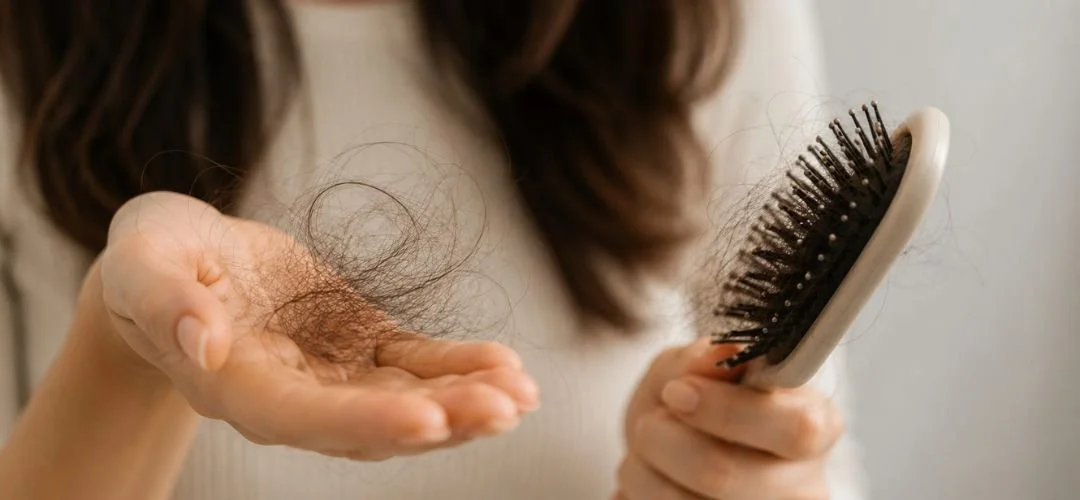
I take care of women every day for hair loss, and more and more, they report it began 3-6 months after initiating a GLP-1 medication. The timing is not idiosyncratic. In one multicenter cohort, the risk of androgenetic alopecia rose significantly by six months and telogen effluvium reached significance by twelve (Vidal 2026). In a cross-sectional study of GLP-1 users reporting hair loss, most described onset within one to three months (Argobi 2026).
Many of these women have had relatively fast significant weight loss, but in some, the hair started falling out before the number on the scale ever moved. That is not just an oddity from my practice. In a TriNetX cohort of more than a million patients, BMI reductions were modest and comparable between GLP-1 users and controls, and the hair loss risk climbed anyway (Herrera 2026). The authors raise the possibility of a direct drug effect, which remains an area of active research.
Almost all of these women are somewhere in the menopause transition, ranging from early perimenopause to post-menopause, and feel strongly that the GLP-1s are helping them. Many of them, even the ones who haven’t lost weight, have been told the hair loss is just because of the weight loss. None of them are completely satisfied by that explanation.
Neither am I.
Yes, rapid weight loss is an established physiologic stressor that can cause telogen effluvium, the type of hair loss occurring when a higher proportion of hair shifts prematurely into the telogen, or resting phase and then sheds. We see the same thing after bariatric surgery, and one analysis found telogen effluvium risk in GLP-1 users did not differ significantly from that of surgical weight loss patients (Neubauer 2025).
Combine that in a woman with heavy cycles in perimenopause whose ferritin is depleted, estrogen is declining, and androgens are relatively unchecked, and the hair on the floor next to the bathroom scale is the sob story crashing the weight loss celebration.
And this is exactly the demographic going on GLP-1s to address the insulin resistance and visceral fat piling on as hormones shift.
These are also the women who aren’t sleeping well, who are sandwiched between aging parents and pubertal children of their own, and who often consider breakfast a scoop of collagen powder in their coffee hoping the protein on the label counts toward their daily total. (It doesn’t.) Actual intake data backs this up. In a cross-sectional study of people on GLP-1s, participants were not meeting the grams per kilogram of protein needed to preserve lean mass during weight loss (Front Nutr 2025).
Does the weight loss these women have sometimes experienced on GLP-1s contribute to their hair loss? Absolutely. Is it the whole story? Not at all.
Even if a woman’s story lines up perfectly to cast 100% of the blame on the weight loss for her shedding hair, I still check for other contributing causes. In no particular order, this is what I look for and why.
Ferritin. Ferritin is a measure of iron stores, and it’s often insufficient in women. The exact optimal levels are debated, ranging from 40-70, with no consensus threshold, and insufficiency alone can cause hair loss. Heavy menses that can characterize perimenopause deplete iron stores. GLP-1s themselves are associated with lower ferritin. A 2026 review covering more than 480,000 adults found GLP-1 users running 26 to 30 percent lower ferritin than a comparator group on a different diabetes medication, with more than 60 percent consuming below estimated requirements for iron (Urbina 2026). Ideally, GLP-1 prescribers check ferritin before initiating GLP-1s, but that is not standard of care. It’s at the top of my lab list for women with hair loss on GLP-1s because it’s often low for multiple reasons, and it’s fixable.
Vitamin D. Vitamin D deficiency is associated with hair loss, and while the mechanism isn’t clearly elucidated, it’s something that supplementation can correct. It is also the most common deficiency documented in GLP-1 users, rising from 7.5 percent at six months to 13.6 percent at twelve (Urbina 2026).
Zinc. Zinc deficiency is pretty rare, but since GLP-1s lead to decreased food intake, it’s a micronutrient that matters more to monitor in this context. Again, zinc can be supplemented. It is important to manage this with a provider though, as high zinc supplement doses can come at the cost of copper depletion. Test and discuss strategy and dose prior to supplementing with zinc. Worth noting: bariatric surgery has structured micronutrient monitoring protocols (Int J Obes 2025). GLP-1 therapy has none.
Thyroid. Many women go on GLP-1s due to difficulty losing weight or gradual weight gain. Hormone shifts in perimenopause can lead to weight gain. So can hypothyroidism. Most GLP-1 prescribers check thyroid hormones as part of standard lab work, but I mention it because if this isn’t checked and caught, it’s a huge miss.
Androgen levels. This is not a panel I send for everyone, but sometimes, it’s important. The telogen effluvium often seen with GLP-1s is a more generalized shedding. At times, this unmasks patterned hair loss, particularly a widened midline part in women, that suggests a more androgen driven etiology. The proposed pathways here include IGF-1 mediated androgen signaling and unmasking of pattern loss after weight change (Zarabian 2026), and one retrospective cohort found the highest androgenetic alopecia incidence with tirzepatide, followed by semaglutide (Singal 2025). When that appears rather abruptly, rather than assuming it’s just the GLP-1 telogen effluvium revealing something that’s been there all along, I check to ensure there isn’t an androgen excess issue and order testosterone free and total, SHBG, DHEA-S, and androstenedione. This is also helpful if women are on testosterone therapy, which is not uncommon in this demographic, to assess if the dose may be too high.
There are also some things that I don’t do that are worth mentioning.
I don’t suggest women stop their GLP-1 because of hair loss. GLP-1s offer established metabolic benefit that women need, especially in the menopause transition. The hair loss is stressful, but manageable. This is also where the literature lands. The recommendation from the most recent scoping review is counseling, monitoring, and proactive treatment, along with slower titration and nutritional optimization (Zarabian 2026). Not discontinuation.
I don’t blindly recommend supplements. Outside of assessing and correcting the deficiencies described above, the data for supplements in this space is thin. A systematic review of nutritional supplements for hair loss found the evidence thin enough that it should not drive treatment (Drake 2023). When we supplement, we do it strategically, not spontaneously.
I don’t overpromise that hormone therapy will fix the hormone component. The data there is very mixed, and the hormone approach that works isn’t replacing estrogen but blocking androgens when clinically appropriate and tolerable.
I have a personal story with GLP-1s as well. I have been taking a very low dose, off-label, prescribed by my endocrinologist for my Type 1 Diabetes. To be clear, I am not dosed for weight loss, and weight loss is not my goal. But before I started the semaglutide, I was having hair thinning, was already on low dose oral minoxidil, and it was at my visit to my endocrinologist that I requested we check on my ferritin level before starting the new medication.
My ferritin was 10. My hemoglobin and hematocrit were also low. As I started the GLP-1, I took action to correct my ferritin level and address the underlying cause, my increasingly heavy and long menstrual cycles. I also started Vitamin D, unsurprised that mine was suboptimal. Thankfully, my thyroid function was fine. I had been on testosterone in the past, but I had stopped it several months prior to see if that would help mitigate my heavy cycles, so we did not check those levels as I did not have any new signs of significant hyperandrogenism.
3 months into semaglutide, I’m almost due for a recheck of my HbA1C. My insulin requirement has decreased, indicating that the medication is helping, and my weight has not changed. I have not experienced new hair loss, so far, at three months. That may be because I haven’t lost weight. It may be because I am already on low dose oral minoxidil and have addressed my iron and vitamin D. It may be a combination of these that are true. And possibly, I’m not someone who would have lost hair on a GLP-1 anyway, as not everyone does.
That’s the trouble of course with an N of 1 example. It’s anecdotal. I don’t share my experience for the purpose of claiming this is the right way to manage women on GLP-1s. I share because as a physician and a patient navigating unknowns in perimenopause, every story sheds a little more light. And by doing that, maybe we can shed a little less hair.
