Menopause Can Be a Real Itch
Since I hit 40 and my kids hit elementary school, I’ve literally found myself scratching my head, wondering if my recurrent scalp itching is from lice, dandruff, or perimenopause. At different times, each of these has been true. Thankfully, I possess the medical knowledge and the nit combs to assess and address my own itchy symptoms. But how do women without a medical degree and a polarized magnifying light manage these symptoms?
It turns out there is a whole sorority of women in their forties trading over-the-counter hacks on TikTok at three in the morning — Flonase in the ears, Crisco for dryness, antihistamines for everything. When Amy Poehler casually mentioned itchy inner ears to Jennifer Lawrence on her podcast last year, the internet collectively exhaled. Other people have this too.
As a board-certified dermatologist, I wanted to weigh in on the OTC hacks women are passing around for the itchy, dry, prickly indignities of perimenopause and menopause — the ones that actually work, the ones that work better than you’d think, and the ones that come up dry on the evidence (sometimes literally).
Here’s my thesis: most of these aren’t really menopause hacks at all. They’re skin hacks. Because almost everything we call a “weird menopause symptom” is, at root, a problem of estrogen-deprived skin and mucosa — sometimes paired with the relative androgen excess that comes along for the ride. Once you see it that way, the hacks start to make a lot more sense — and so do their limits.
The Itch
Itchy ears: the Flonase trick (and where it falls short)
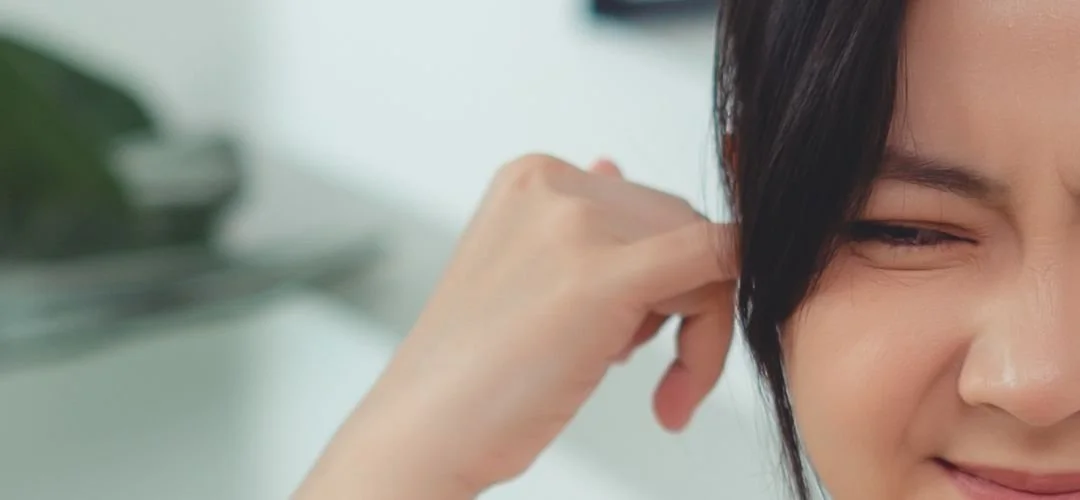
The hack making the rounds — endorsed by menopause specialist Dr. Mary Claire Haver — is to spray Flonase on a Q-tip and gently swipe it inside the ear canal. Does it work? Sometimes. It depends entirely on what’s actually going on in your ear canal, because there are two very different diseases hiding under the same itchy symptom.
Scenario one: eczematous otitis externa. The skin of your ear canal is estrogen-responsive skin, with sebaceous and ceruminous glands that have been quietly thinning and drying for years. In this scenario, the canal is dry, fragile, and barrier-broken — essentially an eczema patch in an inconveniently inaccessible location. A topical steroid spray calms the inflammation. Off-label site, on-target mechanism. Flonase works here.
A caveat worth knowing: Flonase is alcohol-based, and if your canal skin is cracked or already inflamed, you may find yourself trading itching for stinging and burning. Listen to your ears. If it hurts, stop.
Scenario two — and probably more common in midlife than people realize: seborrheic dermatitis. Perimenopause is not just an estrogen-loss story; it’s also a story of relative androgen excess. As estrogen drops, the ratio of androgens to estrogens shifts, and sebaceous glands respond. Activity ramps up in the ears, scalp, eyebrows, nasolabial folds, and chest. That excess sebum is a substrate for Malassezia yeast, the central driver of seborrheic dermatitis. Suddenly, you have an inflammatory, scaly, itchy ear canal with a yeast component layered on top.
This is where Flonase falls short. Seborrheic dermatitis produces a greasy scale, not a dry one. An aqueous nasal spray is the wrong vehicle for a sebum-laden, scaly canal — it doesn’t penetrate the scale and doesn’t address the yeast. This is where prescription oil-based topical steroids (think fluocinolone oil, FDA-approved for scalp seborrhea, or a compounded oil-based steroid) will perform better. You also need an antifungal to address the yeast overgrowth.
The most accessible OTC yeast fix: 1% ketoconazole shampoo (Nizoral, available at any drugstore). Used as a wash on the conchal bowl and outer canal — lather, leave on for three to five minutes, rinse thoroughly — two or three times a week, it directly addresses the Malassezia overgrowth that no nasal steroid spray will touch. Selenium sulfide and zinc pyrithione shampoos work by similar mechanisms and can be rotated in to keep the yeast from adapting.
So before you commit to the Flonase Q-tip as a permanent fixture in your medicine cabinet, ask yourself: Is my ear canal dry, or is it flaky and greasy? Do you also have an oily, flaky scalp or redness and scale in your eyebrow area? Those point more to seborrheic dermatitis, and the relief you get from Flonase, if any, will be temporary.
What about estrogen in the ears?
If estrogen decline is at the root of the itchy ear epidemic, then why don’t we just dab some estradiol cream on the problem and call it a day? The biology is sound. The remedy is not.
Here’s the cascade: falling estrogen creates a relative androgen excess. Those androgens ramp up sebum production. The excess sebum becomes the coziest possible environment for Malassezia yeast to thrive. The yeast triggers inflammation. And inflammation is what makes your ear itch.
By the time you reach for that Q-tip, you’re already three steps downstream of the estrogen problem. Sebum, yeast, and inflammation each need to be addressed directly — with topical antifungals and, when needed, topical steroids. Slathering on estrogen cream at this point will not mitigate the androgen activity, will not reduce the sebum, and will not control the yeast overgrowth. It’s the right idea aimed at the wrong target.
So what would work upstream? Blocking the excess androgens systemically. We already know that spironolactone, an oral androgen blocker, controls cutaneous androgen-excess symptoms — it’s been a workhorse in dermatology for years in treating PMOS-associated acne, hirsutism, and seborrheic dermatitis. The same mechanism that helps a 22-year-old’s hormonal chin acne helps a 47-year-old’s flaking ears, eyebrows, and scalp. We just rarely talk about it that way. And as always, it’s critical to discuss the potential androgen-deficiency side effects when considering these medications as there are always potential trade offs.
The bigger question — and the one I get asked constantly — is whether systemic estrogen replacement would prevent this whole cascade from kicking off in the first place. The honest answer is that we don’t yet have randomized controlled trial data to say definitively. But as more women in midlife replace the estrogen they’ve lost, this is exactly the kind of clinical question dermatologists should be paying attention to — and publishing on. We need to know whether systemic hormone therapy helps, doesn’t help, or shifts the picture entirely for these common menopausal skin conditions. The women living through it deserve real answers, not just our best guesses.
When to dial your dermatologist (or primary care): Inside the canal itself is genuinely referral territory — there are ear-appropriate prescription preparations in oil bases that work far better than anything OTC. And if you’re experiencing pain, throbbing, or hearing loss, you need an otoscopic exam, because wax buildup and true infections can mimic these symptoms. But for a mild itch limited to the outer canal and conchal bowl? That’s accessible territory for an OTC antifungal shampoo.
One general caution for either scenario: long-term topical steroid use in the ear canal causes atrophy, and menopausal skin is already thinning. Steroids are a tool, not a maintenance plan. Fix the barrier (for eczematous), treat the yeast (for seborrheic), and reserve steroids for flares.
The scalp tells the same story
The relative androgen excess that drives ear-canal seborrhea drives scalp seborrhea too, which is why so many of us suddenly find ourselves flaking on a Tuesday afternoon, wondering if we are allergic to our shampoo or if the 3rd-grade lice epidemic has spread to our heads. Perimenopausal scalp can present as seborrheic-pattern flaking (greasy, yellowish scale, itch that worsens with stress and sweat), generalized xerosis, or pure neurosensory itch with absolutely nothing visible to find. Which is exactly how so many of us end up with the lice-or-dandruff-or-hormones bathroom mirror moment.
This is also when many of us reflexively stop shampooing as frequently, misinterpreting the scale as dryness. The oil builds up, and if seborrheic dermatitis is the cause, the flaking and itching worsen.
For the seborrheic flavor on the scalp, the protocol is the same as the ear: 1% ketoconazole shampoo, used as a treatment, not a daily shampoo. Lather, leave on for five minutes, rinse, two to three times a week. Rotate with selenium sulfide or zinc pyrithione. This is a real, evidence-based intervention dressed up as a drugstore purchase — and unlike most of the hacks in this post, it directly treats the underlying disease rather than just managing symptoms.
Flonase or OTC hydrocortisone cream may also help your scalp, as the steroid component relieves the itching.
There are prescriptions available for this as well, and if the over-the-counter options are working after a week or two, call your dermatologist to get more aggressive.
Why I’m Anti-Anti-Histamine for Routine Menopausal Management
Anti-histamines play an important role in managing hives, allergic reactions, and seasonal allergies, and I always have several options stocked at home. However, the trend of using them to manage menopause not only lacks clinical evidence, but it can also backfire by exacerbating the dryness that’s underlying our itching.
Anti-histamines dry out our mucous membranes, leading to dry mouth, dry eyes, and, yes, dry vagina, all of which are perimenopausal symptoms. By loading up on H2 blockers in an attempt to regulate hot flashes, we are depriving our tissues of much-needed hydration. Instead of robbing Patty to pay Paulette, let’s focus on treating the real problems - erratic and declining estrogen, relative androgen excess, and the resulting disrupted skin barrier and microbiome.
The Bigger Point
These hacks exist because menopause care gaps exist. Women are tired of white-knuckling their way through up to a decade of perimenopause and its ever-expanding litany of symptoms. Dousing ourselves in Flonase feels more promising than a copay to see a doctor who still doesn’t understand the interplay between hormones and the skin. Zyrtec loading to relieve hot flashes seems reasonable when your OBGYN told you to wait at least a year after your periods stopped to talk about hormone therapy. Following medical trends on social media from an empathetic stranger feels better than risking another doctor telling you that it’s all in your head.
If you take one thing from this post, let it be this: nearly every “weird” menopausal symptom that involves your skin, your mucosa, your eyes, your ears, your vulva — every one of them has a real biological mechanism, and most of them have a real solution. You’re not crazy. You’re not imagining it. And you don’t have to live with it.
